Buying X Accounts in 2026: What Buyers Should Know Before Spending Money
People have been doing it quietly for years, whether the platform approves of it or not.
The reason is simple. Building a new X account from zero is slow, unpredictable, and frustrating. You can post consistently, share quality content, and still get little to no traction in the beginning. That is why many buyers start looking at aged X accounts, niche accounts, and follower-based listings as a shortcut.
But in 2026, buying X accounts is not as simple as picking a listing and paying for it.
The market is full of low-quality accounts, fake engagement, recycled profiles, weak follower bases, and sellers who present accounts in the best possible light while hiding the real risks. Some accounts look valuable on the surface but perform poorly in practice. Others may have visibility issues, poor audience relevance, or a history that reduces long-term usefulness.
That is why buyers need to be more careful than ever.
In this guide, we will walk through:
- why people buy X accounts in 2026
- what types of accounts buyers usually look for
- the biggest risks involved
- what to check before buying
- which marketplaces buyers often compare
- and what safer alternatives may be better in the long run
Let’s start with the basics.
Why Buy X Accounts in 2026?
Getting attention on X is hard, especially with a brand-new profile.
New accounts often struggle with low visibility, low trust, weak discoverability, and almost no built-in audience. Even when the content is good, growth can feel painfully slow. Many users spend weeks or months posting without meaningful engagement.
That is the main reason buyers look at aged X accounts.
An older account may already have followers, posting history, account age, and some level of audience familiarity. For marketers, creators, affiliate users, and small brands, that can look like a faster path than trying to grow from zero.
Buyers are usually looking for one or more of these advantages:
- older creation date
- existing followers
- niche relevance
- stronger-looking account history
- better starting credibility than a fresh profile
That is also why search terms like buy X accounts, buy Twitter accounts, aged Twitter accounts for sale, and Twitter accounts with followers remain popular. Buyers want speed, not a long trust-building process.
But speed comes with trade-offs.
What Happens If You Just Start a New X Account?
If you build from scratch, you control everything.
You choose the niche, the voice, the branding, the posting style, and the audience direction from day one. There is no transfer risk, no hidden account history, and no uncertainty about what the account was used for before.
The downside is that growth is slow.
A new account has no built-in momentum. It may take time to earn followers, reach, and engagement. That is exactly why some buyers prefer to skip that stage and look for aged or niche-specific accounts instead.
Still, a new account has one major advantage that bought accounts often lack: clarity.
You know exactly where it came from and how it was built.
What Are You Actually Buying?
This is where many buyers make mistakes.
They see a listing that says aged Twitter account, old X account, or Twitter account with followers, and assume that account automatically has value.
But that is not always true.
An account is not valuable just because it is old. It is not valuable just because it has followers. And it is definitely not valuable just because the seller says it is “high quality.”
What you are really buying is a mix of factors:
- account age
- follower count
- follower quality
- niche relevance
- posting history
- engagement consistency
- ownership risk
- account reputation
- visibility condition
If those factors are weak, the account may be worth far less than the listing suggests.
That is why buyers should evaluate the type of account, not just the headline.
Common Types of X Accounts Buyers Look For
1. Aged X Accounts
These are older accounts, often sold by creation year.
Listings commonly promote accounts created in earlier years because buyers associate age with trust, stability, and easier positioning compared to fresh accounts. In reality, age can help, but only when the rest of the profile is also solid.
An old account with poor engagement and unrelated followers may not be very useful.
2. Phone-Verified Accounts
Some buyers look for phone-verified accounts because they believe those accounts are more credible than unverified ones. Sellers often highlight this as a trust signal.
Still, verification history alone does not make an account high quality. Buyers should treat it as one factor, not the whole picture.
3. Niche-Aged Accounts
These are often more attractive than generic aged accounts.
A niche-aged account may already have followers who are interested in a specific topic such as gaming, crypto, sports, fashion, business, or entertainment. That can make the account more useful than a general profile with random followers.
For many buyers, niche relevance matters more than follower count.
4. High-Follower Accounts
These listings are designed to catch attention quickly. A big follower number looks impressive, but the real question is whether those followers are relevant, active, and authentic.
A large follower count with poor interaction is often a warning sign.
5. Premium or Badge-Associated Accounts
Some buyers specifically look for premium-linked profiles because they expect stronger visibility or more perceived authority. These listings usually cost more, but they also carry higher transfer and stability concerns.
6. Bulk X Accounts
Bulk listings are usually aimed at marketers, resellers, or buyers focused on volume rather than brand-building. The appeal is price-per-account efficiency, but quality can vary heavily, and risk scales with quantity.
The Biggest Risks of Buying X Accounts
Buying X accounts can look like a shortcut, but there are several serious risks buyers should understand before spending money.
Fake Followers
One of the most common problems is low-quality or fake followers. The account may show a strong number, but if the audience is inactive, irrelevant, or artificially inflated, the practical value is weak.
Poor Engagement Quality
Some accounts have followers but almost no real interaction. This usually means the account will not perform the way buyers expect.
Niche Mismatch
An account built around one topic may not transition well into another. If the audience followed for a completely different reason, your content may not connect with them at all.
Hidden Restrictions
Some accounts have visibility issues, weak discovery, or other performance problems that are not obvious from a simple profile screenshot.
Prior History Problems
Accounts may have been used for spam, low-quality promotion, or activity that reduced their long-term quality. Buyers often do not discover this until after purchase.
Recovery and Ownership Risk
Even when a seller claims full access, the transfer process may still carry risk. If the ownership trail is unclear, the buyer may be left with uncertainty from day one.
Marketplace Variability
Not all marketplaces offer the same level of protection, dispute handling, or listing transparency. Some are stronger for niche social profiles, while others focus more on volume or broad digital goods.
What to Check Before Buying an X Account
Before buying any listing, buyers should slow down and check the basics properly.
Check the Account’s Content History
Look at what the account has posted, what niche it operated in, and whether the content history looks natural and relevant.
Look Beyond Follower Count
Follower count alone is not enough. A smaller but relevant audience may be worth more than a large but weak audience.
Review Engagement Patterns
Do posts receive real replies, meaningful interaction, and consistent niche engagement, or does the account look inflated?
Check Audience Relevance
If you want a gaming audience, a random general-interest profile is probably not ideal. Audience fit matters.
Ask About Ownership Clarity
Buyers should prioritize listings where transfer details, access details, and account background are explained clearly.
Compare Price Against Risk
An account may look cheap, but if it has weak followers, vague history, or no useful seller detail, it may still be overpriced.
Understanding Account Quality
A lot of buyers chase account age and follower count because those are the easiest things to see.
But experienced buyers usually care more about account quality.
A quality X account is not just old. It has a believable history, a relevant audience, reasonable engagement, and fewer obvious warning signs. It looks like an account people would actually want to follow, not just a profile that was created years ago and left sitting there.
In most cases, the best account is not the oldest one.
It is the one with the best combination of:
- relevant niche
- believable audience
- useful posting history
- reasonable engagement
- lower visible risk
That is the difference between a listing that looks attractive and one that may actually deliver value.
Marketplace Review: Where Buyers Commonly Compare X Accounts
When buyers start researching where to buy X accounts, the same marketplace names come up repeatedly.
The exact quality of listings depends on the seller, not just the platform. Still, each marketplace has its own style, strengths, and buyer appeal.
Here are five names buyers often compare in 2026.
1. PE2P.com

PE2P.com is often considered by buyers looking for a marketplace-style experience across digital categories such as accounts, games, subscriptions, software, and related services. join now
For X account buyers, PE2P stands out as a platform buyers may review when comparing listing variety, seller competition, and structured marketplace flow. It can appeal to users who prefer browsing multiple offers in one place instead of dealing only with private forum-style listings.
The main thing buyers should still focus on is listing quality. Marketplace design helps, but the real value still comes down to the individual account, the seller’s transparency, and the buyer’s own review process.
2. FameSwap
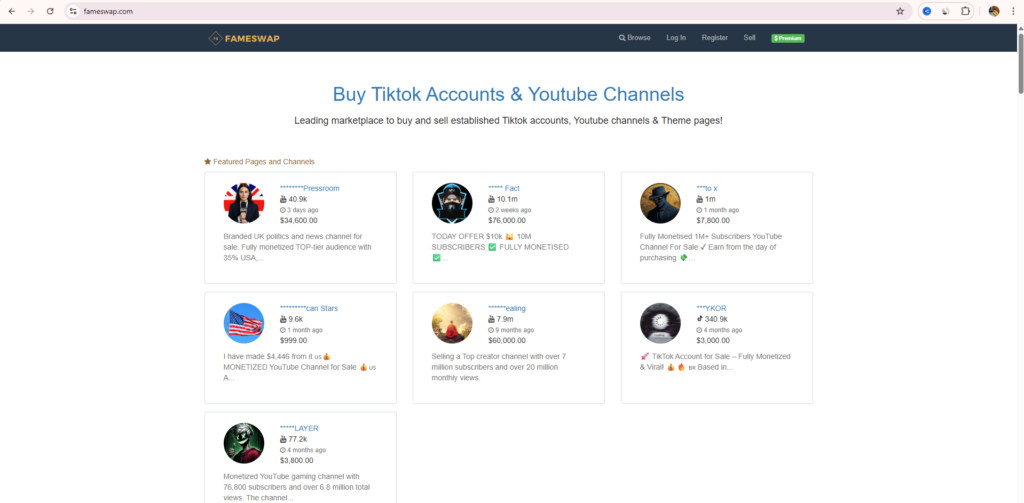
FameSwap is more social-property oriented than many broad digital marketplaces.
It is often associated with creator-focused and audience-focused listings, which makes it especially interesting for buyers who care about niche relevance, branding potential, and follower quality rather than just raw bulk access.
If a buyer wants a profile that feels more like a media or creator asset, FameSwap is often one of the first names they compare.
3. Z22U
Z22U is a large digital goods marketplace with broad category coverage. Buyers often compare it because of listing variety, international seller presence, and price competition.
For X buyers, Z22U can be attractive when comparing multiple account styles and price points, especially if the goal is to explore more budget-sensitive options. As always, the challenge is separating strong listings from weak ones.
4. AccsMarket
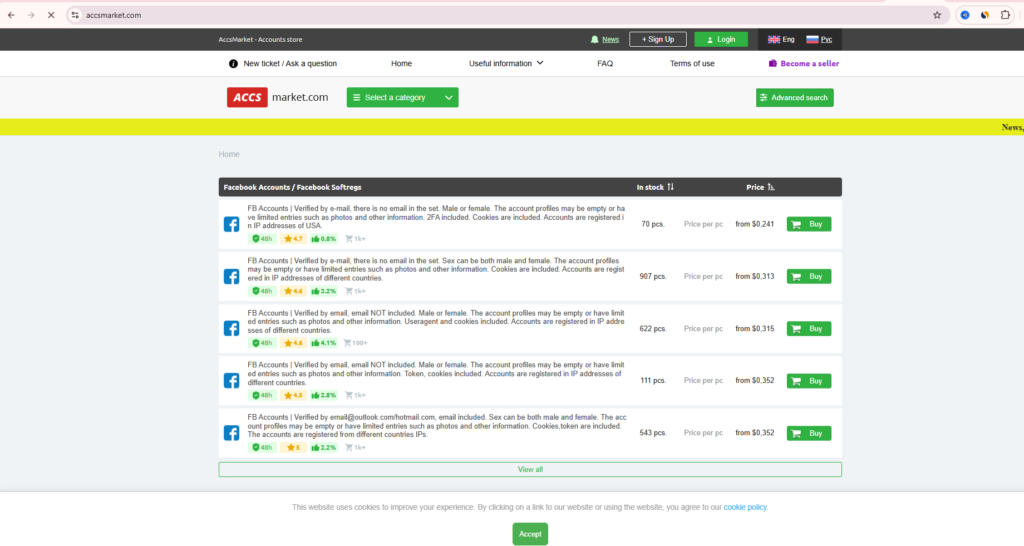
AccsMarket is often mentioned in discussions around account inventory across different platforms.
It tends to be more account-focused than some general marketplaces, which is why many buyers compare it when researching aged profiles, bulk options, or different account years. Buyers who are price-sensitive or inventory-focused often keep it on their comparison list.
Still, the same rule applies: inventory volume does not automatically mean account quality.
5. G2G
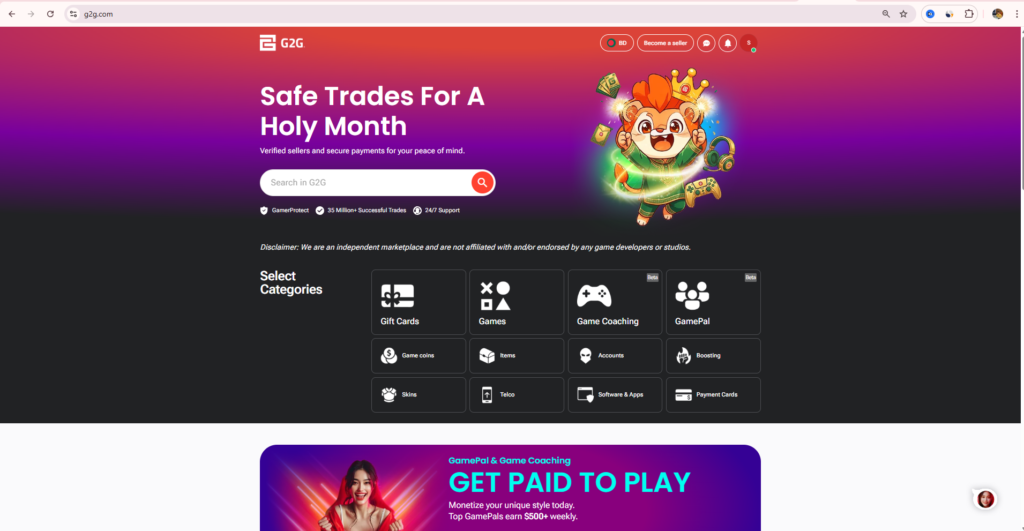
G2G is one of the better-known digital marketplace brands in this space and often appears in buyer comparisons because of its broad marketplace reputation, visible seller competition, and familiar transaction flow.
For X account buyers, G2G is usually considered as part of a wider marketplace comparison rather than as a niche social-media-only destination. Buyers often evaluate it based on trust signals, listing depth, and seller-side competition.
Which Marketplace Is Best?
There is no universal answer.
The best marketplace depends on what the buyer actually wants.
If the priority is niche relevance and social-profile appeal, some buyers lean toward platforms that are more creator-oriented.
If the priority is variety and broader marketplace browsing, some buyers prefer multi-category marketplaces.
If the priority is account volume or age-based inventory, some account-focused platforms may get more attention.
The better question is not “Which marketplace is best overall?”
It is:
- Which marketplace has the best listing for your use case?
- Which seller explains the account most clearly?
- Which offer gives the best balance of quality, relevance, and buyer confidence?
That is how experienced buyers usually compare.
Safer Alternatives to Buying X Accounts
Not every buyer should purchase an account.
In many cases, a safer and more sustainable move is to build or grow a profile using alternative methods.
Build a New Niche Profile
This is slower, but it gives you full control over your brand, positioning, and audience.
Collaborate With Existing Creators
Instead of buying an account, some brands get exposure through creator partnerships, shoutouts, or sponsored placements.
Use Cross-Platform Traffic
A new X profile can grow faster if you bring attention from YouTube, TikTok, Instagram, Reddit, Discord, newsletters, or an existing audience.
Buy Attention, Not Ownership
For some use cases, promotion and audience access may be more practical than acquiring an account with uncertain history.
Final Thoughts
Buying X accounts in 2026 can look like a shortcut, but it is not a simple one.
Aged accounts, niche profiles, and follower-based listings may seem attractive, especially for buyers who want faster visibility. But not every old account is valuable, not every high-follower profile is useful, and not every listing tells the full story.
The smartest buyers do not focus only on age or follower count.
They look at audience relevance, content history, engagement quality, seller transparency, and overall risk.
That is what separates a smart purchase from an expensive mistake.
If you are comparing PE2P.com, FameSwap, Z2U, AccsMarket, and G2G, keep one thing in mind: the marketplace matters, but the actual account quality matters more.